Trace and access leak detection for insurance claims
Trace and access is the part of a home insurance policy that pays to find a hidden leak and to reach it, and Caledonian Leak Detection carries out the finding part for homes across mainland Scotland.

Illustration: water from a hidden leak spreading through the ceiling below a bathroom.
What is trace and access cover?
Trace and access cover is cover in a buildings insurance policy that pays to find where a hidden leak is coming from and to remove and replace the parts of the building in the way of reaching it.
- Trace
- Finding the source of escaping water that cannot be seen, such as a pipe leaking under a floor, inside a wall or below the ground.
- Access
- Lifting floors, cutting into walls or ceilings and digging where needed to reach that pipe, then replacing what was removed; some insurers also pay to put the home back as it was.
- Not included
- Repairing the leaking pipe or tank itself, which falls outside trace and access.
Sources: Admiral, What is trace and access cover?; MoneySuperMarket, Trace and access cover.
What does trace and access cover not pay for?
Trace and access cover does not pay to repair the leaking pipe or tank, and it does not pay for anything the policy excludes.
The limit on the cover and the excess are set by each insurer and each policy, so it is worth finding the figures in your own policy documents. Outside the cover sit:
- The repair of the leak itself: replacing the joint, the length of pipe or the tank.
- Costs not directly related to finding the leak.
- Damage that built up gradually, such as damp, mould or failed sealant, which insurers commonly exclude.
- Leaks put down to wear and tear, another common exclusion.
Trace and access is common in buildings insurance but not universal, and a contents-only policy rarely includes it. That is why the policy wording, read before the work starts, matters more than any general guide, this page included.
Sources: MoneySuperMarket, Trace and access cover; Ageas, What is tracing a leak?.
How does a trace and access claim work?
A trace and access claim works in this order: read the policy, tell the insurer, have the leak located, then keep the findings and the invoices for the claim. Some insurers ask you to pay first and claim the cost back.
Read the policy for trace and access
It is a good idea to check that the buildings policy includes trace and access, and to note its limit and excess.
Tell the insurer before any work starts
Insurers handle this in different ways. One may send its own specialist, another may leave you to book one and recover the cost, and Ageas requires its agreement before work starts, so find out which applies first.
Have the leak located
The source is pinpointed with the methods that suit the pipe, and its position is marked so the access work stays small.
Keep the findings, photographs and invoices
Keep the written findings, photographs of the leak and the damage, and every invoice to hand. Keep any failed part or length of pipe until the insurer confirms it is no longer needed.
What does an insurer need from a leak investigation?
An insurer needs to know where the leak is, which pipe or system it is on, the access work needed to reach it, and photographs that show it.
Each of those answers a question the claim turns on:
- The location, so the access work can be judged against what it has to reach.
- The pipe or system, whether the cold supply, the hot water or the central heating.
- The access work needed, the floor, wall, ceiling or ground that has to be opened.
- Photographs of the leak and the damage around it, which insurers usually ask for, kept with the invoices.
- The cause, where it can be established, because insurers exclude wear and tear and gradual damage.
Sources: Confused.com, Aviva, Admiral, Ageas, What is tracing a leak? and Financial Ombudsman Service decision DRN-5382026.
Is it worth claiming on home insurance for a leak?
Whether it is worth claiming on home insurance for a leak depends on the policy excess, the size of the damage and whether the policy includes trace and access; the policy and the insurer decide.
- The excess
- The amount you pay towards any claim, set in your policy. Compare it with what the work would probably involve.
- The damage
- A ceiling, floor or wall already spoiled by water, or water reaching the flat below, weighs differently from a slow drip under a sink.
- The cover
- A policy with trace and access can pay for finding the leak and reaching it; one without it leaves that cost with you.
- The insurer's decision
- Only the insurer can say whether a claim is accepted, so get in touch with it before work starts.
Whose insurance pays for a leak in a tenement or a let flat?
The title deeds decide who owns and must repair the leaking pipe in a tenement or a let flat, and the Tenement Management Scheme applies where they are silent; what each buildings policy pays is set by its own wording.
So the owner of the leaking pipe and the owner of the damaged flat each tell their own insurer before any work starts, and each insurer decides what its policy covers. Copies of the title deeds come from the Registers of Scotland.
A tenant goes to the landlord, who arranges the repair. For a leak on the shared parts of a building, a registered property factor may well be managing the common repairs. Water coming through a ceiling from the flat above is covered on the page about hidden leak detection for water pipes.
Which leaks can be traced for an insurance claim?
Hidden pipe leaks, central heating leaks and underground supply pipe leaks can all be traced for an insurance claim, with the findings set out for the insurer.
Hidden pipe leaks
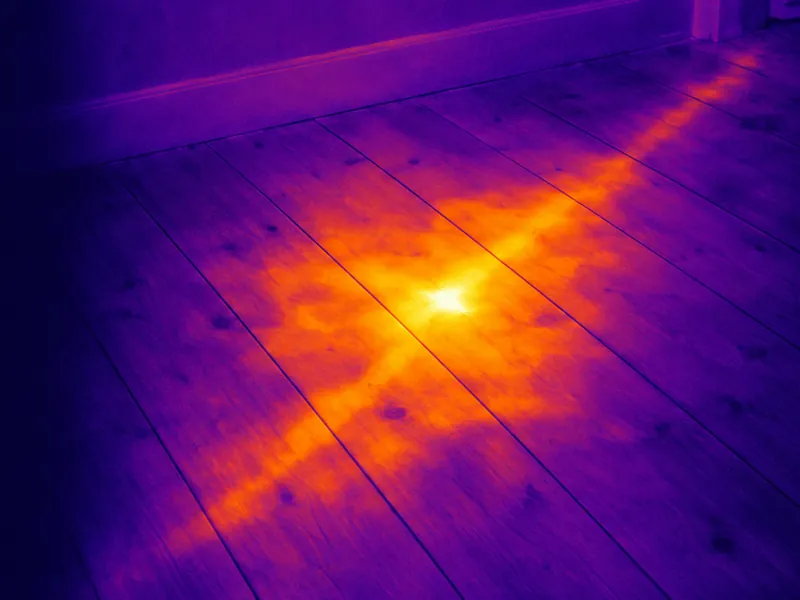
Damp or a ceiling stain from the water pipes calls for hidden pipe leak detection inside the property.
Central heating leaks
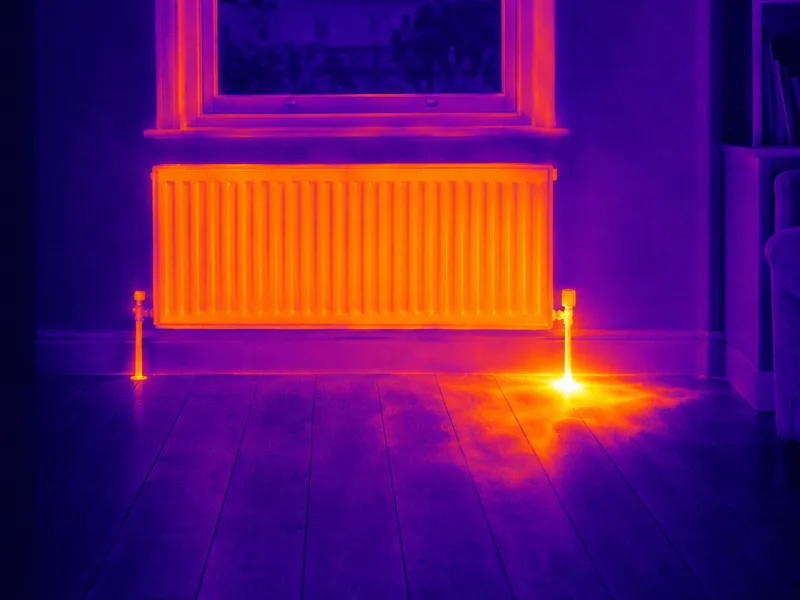
A boiler that keeps losing pressure points to central heating leak detection on the heating circuit.
Underground supply pipe leaks
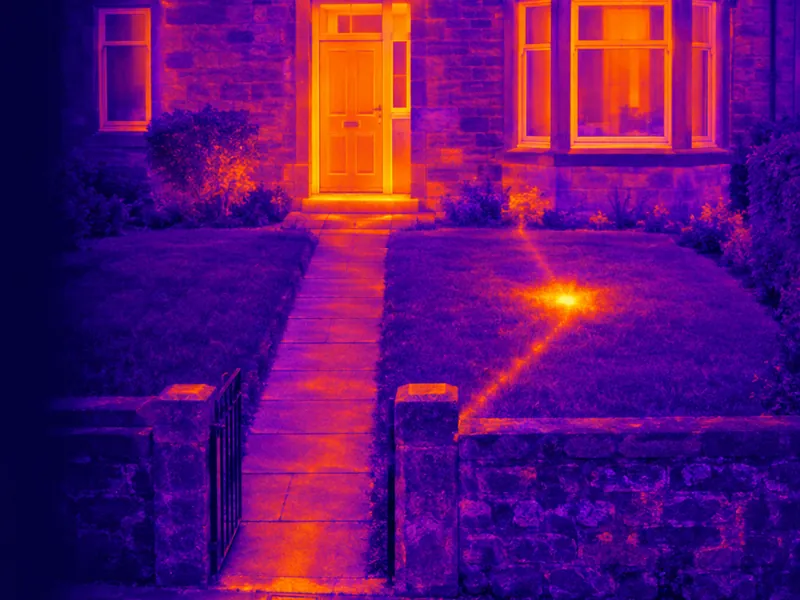
Wet ground over the supply pipe outside needs underground water leak detection between the stopcock and the house.
Separate pages for the four cities appear with the guide to leak detection in Scotland.