Hidden leak detection for water pipes in Scotland
Hidden leak detection finds a leak on the hot or cold water pipes inside a property, under floors, inside walls or behind kitchens and bathrooms, before anything is opened.

Illustration: a pipe leak under floorboards, found before anything is lifted.
Where do hidden water pipe leaks happen?
Hidden water pipe leaks happen under floors, inside walls and ceilings, behind kitchen units and baths, and on pipes laid in concrete floors: anywhere a pipe runs out of sight between the stop valve and a tap. Caledonian Leak Detection traces these leaks in houses, flats and small commercial premises across mainland Scotland.
The cross-section below marks four of those places in a sandstone tenement: under a kitchen floor, beside a radiator, in a ceiling below a bathroom and on the supply pipe under the ground. In a block of flats the damp sometimes shows in the flat below, so the stain and the leak can sit in different homes.

- Pipe under the kitchen floor
- Radiator and heating pipe
- Ceiling below a bathroom
- Underground supply pipe
Illustration: four places hidden leaks occur in a tenement.
What are the signs of a hidden pipe leak?
A damp patch or a brown stain on a ceiling or wall is usually the first sign of a hidden pipe leak, and the other signs below can point to one too.
- Damp patches or brown stains on a ceiling or wall are usually the first signs, sometimes with peeling paint or bubbling wallpaper.
- A stain on the ceiling below a bathroom or kitchen can come from a pipe leaking in the room above, such as a shower supply pipe.
- A musty smell or mould on a ceiling or an inside wall may mean a hidden pipe leak.
- Warped floorboards or water stains on a floor can show where water from a leak has reached.
- Running water or a hiss with every tap off could mean water is escaping from a pipe.
- Lower water pressure at the taps could mean water is leaking out before it reaches them.
How is a leak under a floor or inside a wall found?
A leak under a floor or inside a wall is found by isolating the hot and cold pipes, pressure testing each one separately, and then narrowing the leak down with the method that suits that pipe.
- Pressure testing
- A system or a section of it is sealed, pressurised and watched on a gauge over a set time, and a part that will not hold its pressure normally has a leak.
- Suits Telling which pipe is leaking, because the hot and cold runs are tested one at a time, and confirming the leak is real before a board is lifted.
- Thermal imaging
- A thermal imaging camera shows the temperature of the surface it is pointed at, so water escaping from a hot pipe, central heating or underfloor heating shows as a warm patch, and damp can show as a cool one.
- Suits Hot water pipes under floorboards, in tiled or concrete floors and behind plaster, where the escaping water warms the surface above the pipe.
- Acoustic listening
- A listening stick on a pipe or fitting, or a ground microphone on the surface, picks up the noise of water escaping from a pressurised pipe, and the leak lies near the point where the sound is loudest.
- Suits Cold pipes still under mains pressure, where the escaping water makes a noise along the run inside the walls or floors.
- Tracer gas
- The pipe is drained and filled with a mix of 5% hydrogen and 95% nitrogen, which escapes at the leak and rises through the floor or ground, where a hydrogen detector finds the highest reading.
- Suits Pipes laid in concrete floors, and leaks too quiet to hear or too small to show as heat.
- Moisture mapping
- Moisture meter readings taken across a wall, floor or ceiling, often on a grid, show how far water has spread and where the material is wettest.
- Suits Walls, floors and ceilings that water has reached, including behind tiles and floor coverings, to show where it has travelled from the pipe.
Each method has a limit, which is why more than one is often used. A thermal camera reads the surface, not the pipe, so it needs a temperature difference to show anything. Acoustic listening needs a pressurised pipe and a leak loud enough to hear. Moisture readings on stone, brick and plaster are relative: they show where a wall is wetter rather than how much water it holds.
What can you check before calling about a hidden leak?
Close every tap and water-using appliance, then listen at the internal stop valve, turn it off and listen again. If the noise stops, the leak is most likely inside the property; if it carries on, it is most likely outside.
- Find the internal stop valve (a stopcock inside the home). It is usually under the kitchen sink, and otherwise under a utility sink, in a garage, under the stairs or near the hot water system. It normally closes clockwise.
- Check with neighbours first in a flat or terrace, because the supply may be shared and turning it off can cut theirs too.
- Switch off the electricity at the mains if water could reach wiring or fittings, but only if it is safe and never while standing in water.
- Note where the damp is, when it appears and whether it spreads, along with any change in pressure.
None of these checks can pinpoint a leak. They tell you whether it is worth having the pipes tested, and the notes you make help whoever traces it.
Source for the listening test: Wessex Water, Unmetered leak test.
Who is responsible for a leak from the flat above?
The owner of the pipe that leaks is responsible for a leak from the flat above. In a Scottish tenement the title deeds usually set out who owns and repairs what, and where they are silent the Tenement Management Scheme in the Tenements (Scotland) Act 2004 supplies the rules.
In the first instance, speak to the neighbour upstairs about water coming through your ceiling, and leave a note if they are out. If the upstairs flat has its own stopcock, it can be turned off. If the flat is let and you cannot reach the owner, the National Landlord Register can trace them. Tenants report a leak to their landlord or the owner, who arranges the repair.
A pipe shared by several flats is a different case, because in some cases the owners on it share the cost. Copies of the title deeds come from the Registers of Scotland. When the damage is going to an insurer, read about trace and access for insurance claims before anything is opened up.
Source for the first steps: City of Edinburgh Council, unsafe buildings and emergency repairs; for title deeds and the Tenement Management Scheme: Citizens Advice Scotland.
What happens once a hidden pipe leak is found?
Once a hidden pipe leak is found, its position is marked on the surface so that any opening is as small as possible, and the findings are written up for whoever repairs it or claims for it.
Marking the leak on the floor or wall
The leak position is marked on the surface above the pipe, so any board lifted or plaster cut to reach it is kept as small as possible.
Writing up the hidden pipe leak findings
The write-up records the leak's position, the pipe it sits on, what has to be lifted or cut to get at it, and photographs.
Passing the leak findings to the plumber, landlord or insurer
The findings go to the owner, the plumber who repairs the pipe, the landlord or factor, or the insurer. Where a policy covers it, Caledonian Leak Detection provides trace and access leak detection with the findings set out for the claim.
Which other leaks does Caledonian Leak Detection find?
Central heating leaks and underground supply pipe leaks are traced by Caledonian Leak Detection as well, with the same pressure tests, cameras, listening equipment and tracer gas used on the water pipes.
Central heating leaks
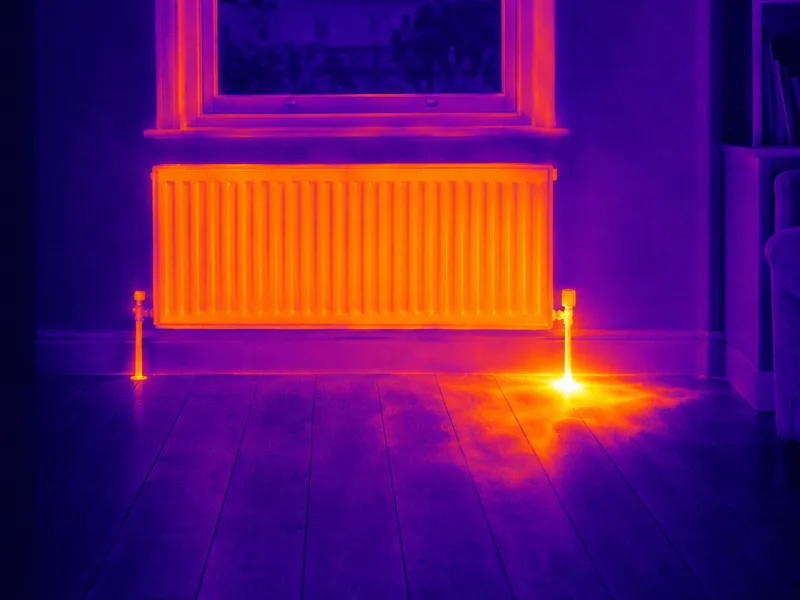
A boiler that keeps losing pressure calls for central heating leak detection on the radiator and underfloor pipework.
Underground supply pipe leaks
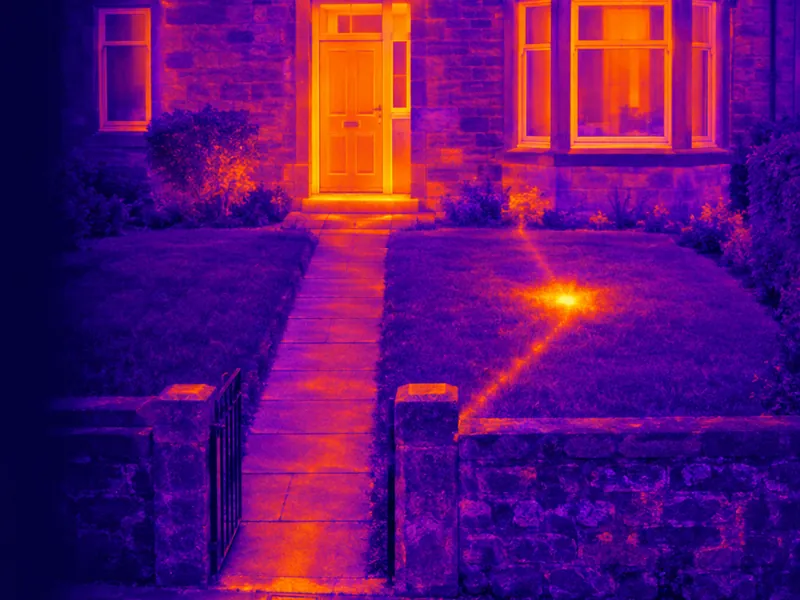
Wet ground or falling pressure between the stopcock and the house calls for underground water leak detection on the supply pipe.
Glasgow, Edinburgh, Aberdeen and Dundee each have their own page as well, all four listed under leak detection in Scotland.