Leak detection in Dundee
Caledonian Leak Detection finds hidden water leaks in Dundee homes and businesses across the DD postcode area, from Broughty Ferry to Arbroath and Forfar, before a plumber opens anything up.

Illustration: a Dundee tenement, with a leak showing low on the front wall.
Which parts of Dundee does Caledonian Leak Detection cover?
Caledonian Leak Detection covers all 11 DD postcode districts, set out below with their post towns.
The DD area follows the Tay and the Angus coast through Carnoustie, Arbroath and Montrose, runs inland to Forfar, Kirriemuir and Brechin, and crosses the water to Newport-on-Tay and Tayport. Perth and St Andrews, for example, have postcode areas of their own (PH and KY) and are listed on the areas covered page.
DD: Dundee
- DD1 Dundee
- DD2 Dundee
- DD3 Dundee
- DD4 Dundee
- DD5 Dundee
- DD6 Newport-on-Tay, Tayport
- DD7 Carnoustie
- DD8 Forfar, Kirriemuir
- DD9 Brechin
- DD10 Montrose
- DD11 Arbroath
Can a plumber do leak detection in Dundee?
Yes, a plumber in Dundee can find a leak that shows and repair it, and a hidden leak can be located first with acoustic, thermal and tracer gas equipment, so the plumber opens up in the right place.
The two jobs fit together. Leak detection works out where the water is escaping; the plumber's repair deals with it. If a plumber has already checked the visible pipework and found nothing, tracing the leak first means opening up in one place rather than lifting floors or digging up a path on a guess.
Tracer gas is probably the least familiar of the three. The pipe is drained and filled with a mix of 5% hydrogen and 95% nitrogen, which escapes at the leak and rises through the floor or ground to a detector. Once the position is found, it is marked on the surface, and the note of where it is and what access the repair needs goes to the plumber. Tracing a leak under a floor or inside a wall like this is what hidden leak detection for water pipes covers.
Who arranges repairs in a Dundee tenement?
The owners of a Dundee tenement arrange common repairs between them, following their title deeds. Where the deeds are silent, the Tenement Management Scheme supplies default rules under the Tenements (Scotland) Act 2004, and the Registers of Scotland hold copies of the deeds.
Flats that share one supply pipe may be jointly liable for a leak on it, so finding and fixing it can be a cost the owners club together for. Where a property factor manages the common parts, it is worth raising the leak with them; tenants tell their landlord instead.
Which leak detection services are available in Dundee?
Dundee and Angus properties can have any of the four investigations: a hidden leak on the water pipes found, a central heating leak traced, a leak on the buried supply pipe located, or a leak traced for an insurance claim.
Hidden pipe leaks
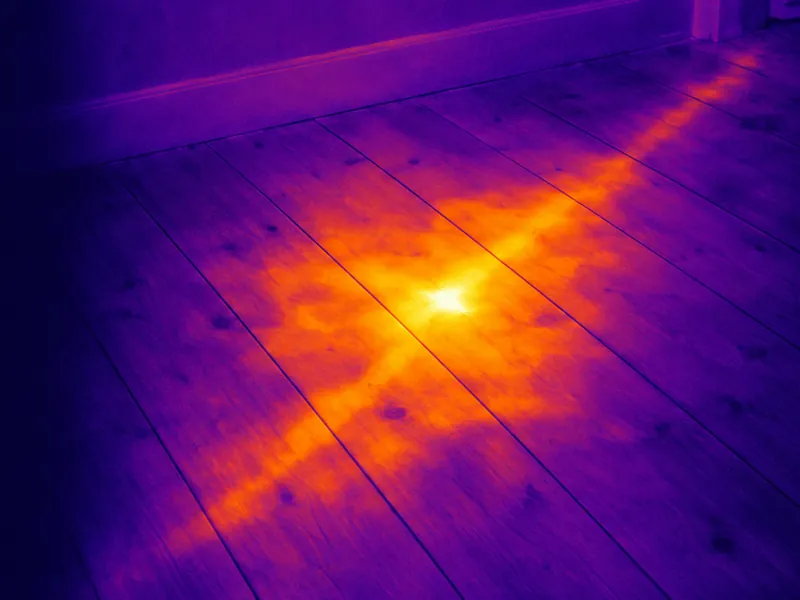
In a Dundee flat, a slow leak from a pipe inside a wall may show only as a damp patch or a musty smell, and hidden pipe leak detection follows it back to the pipe.
Central heating leaks
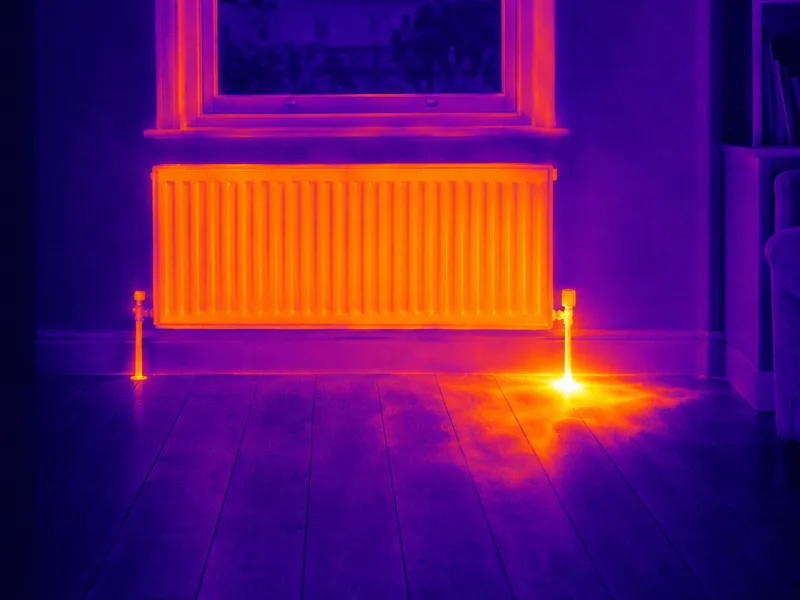
A sealed system reading below 1 bar is low, and if a boiler keeps dropping back there, central heating leak detection looks for the escaping water along the radiator and underfloor pipework.
Underground supply pipe leaks
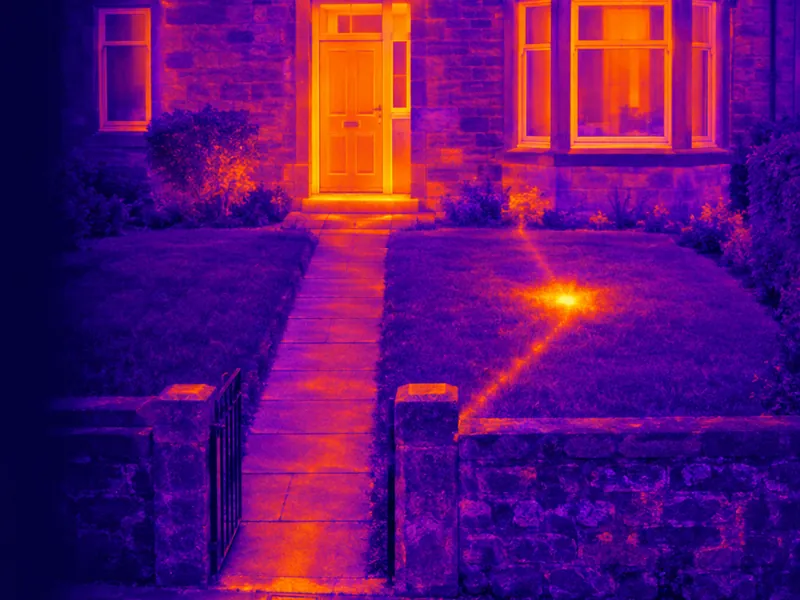
Ground that stays wet in dry weather, or a strip of greener grass, can point to a leak on the supply pipe, and underground water leak detection finds it under a Dundee garden or path.
Leaks traced for an insurance claim

Some insurers send their own specialist to a Dundee home and others ask you to arrange one, so it is worth checking first; where you arrange it, trace and access leak detection gives the insurer the leak's location.
More on leak detection in Scotland, including the five methods, is on the home page.
Where does Dundee's water come from?
Dundee's water comes from the Loch of Lintrathen and the Backwater Reservoir, treated at Clatto, and Scottish Water looks after that network up to the stopcock.
From the stopcock to the internal stop valve indoors, the supply pipe belongs to the property, which in a tenement can mean several owners on one pipe. Knowing who is responsible for an underground leak tells you whether to phone Scottish Water or arrange the tracing yourself. With every tap off, listen at the internal stop valve, then turn it off and listen again. If the noise carries on, the leak is most likely outside. If it stops, it is most likely inside.